Whilst the goal of all carpets is to protect your flooring surface and look good doing it, every building has specific needs that the right carpet tiles can excel at.
A particularly stark difference can be seen between the needs of carpets at home, in residential buildings and in hotel rooms compared to those seen in retail, commercial buildings and offices.
From a stylistic and aesthetic viewpoint, the carpets can look very similar, but they are often constructed in a fundamentally different way, and that can lead to some fascinating results.
Here are some of the fundamental differences between the types of carpets used in residential and commercial buildings.
Durability And Texture
Commercial buildings are typically high-traffic areas, and because of this, the constant movement of feet, trolleys and heavy equipment across them requires a heavy-duty carpet pile that can survive the rigours of a busy day, as well as industrial strength cleaner.
By contrast, home carpets tend to be lighter, softer and more prone to wearing out over time, because they typically receive a minuscule proportion of the intense workload a commercial building will experience over the course of a day.
Another consideration is footwear; home carpets assume that people will primarily be walking on them with either socks or slippers, whilst commercial carpets necessarily will be walked on by people wearing various types of shoes that could potentially wear out the pile quicker.
Installation Method
Home carpets tend to be replaced far more rarely than those in busy office buildings, and this can have an effect on the types of installation methods that are the most cost-effective and least labour-intensive possible.
They tend to be applied in room-sized rolls that are cut to measure, fitted and typically forgotten about because changing them is something that happens as little as once a decade.
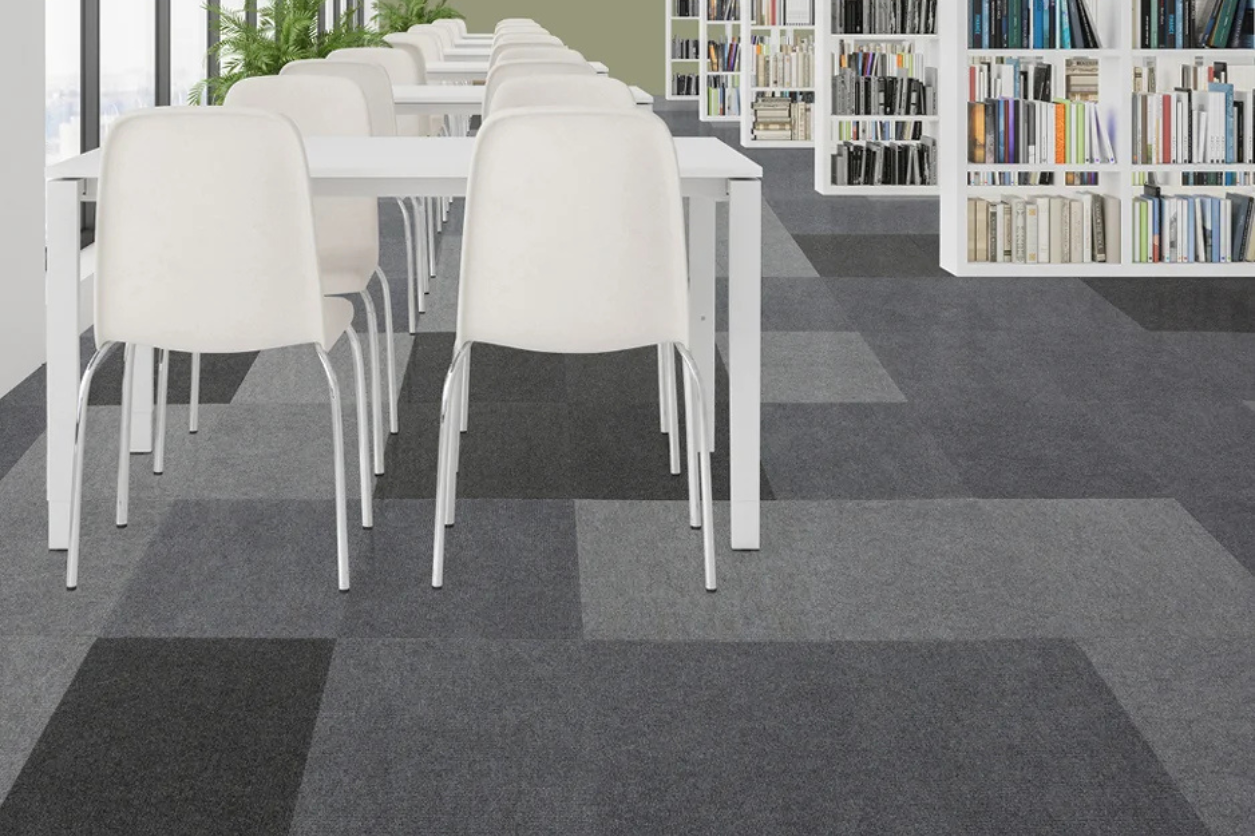
Commercial carpets, by contrast, will wear out at different rates based on traffic, and that means that it will often be more cost-effective to buy tiled carpets that can be swapped out as and when they are needed, which keeps the rest of the surface looking pristine and new.
However, this is not entirely clear cut; there are very heavy-duty carpet rolls available for commercial settings, and home carpet tiles have conversely become increasingly popular for hallways and living rooms precisely because they can be regularly swapped out as and when they are needed.
Preferred Styles
There is a wide range of styles, patterns and textures available for both homes and offices, and there is a high degree of overlap in the types of carpets that end up widely used.
After all, a small business that does not have a huge number of outside staff members may have a preference for a slightly softer pile or a pattern that is not typically used in an office environment, and home offices could possibly benefit from more neutral, professional carpet colours.
Typically however, office carpets tend to opt for relatively neutral shades or colours that match the branding of the company, biophilic designs such as rock motifs and textures designed to be busy and active enough to minimise stains and the first signs of wear.
By contrast, carpets in houses are more commonly designed around artistic expression, and homeowners choose shades, colours and textures that match their vision for a particular room, with practicality being a secondary consideration.
For example, whilst a soft-pile white carpet would be seen in a home, albeit even then most likely as a rug that could potentially be washed, anything that light of a shade would attract mud, stains, scuff marks from shoes and any other possible still or stain that you can imagine.
Safety
Safety is a critical aspect of any carpet installation, but it can often be a factor in carpet choice as well, particularly since there are potentially serious legal ramifications if a commercial or retail building features a carpet which turns out to be dangerous.
One particularly unfortunate example of this reported by the Health and Safety Executive involved an unsuitable carpet that ultimately turned out to be a trip hazard that caused a serious injury to someone.
Proper installation is key, but the difference between carpets in the home and carpets in public places is that whilst the former should be safe and typically assumes they are properly installed, the latter must be safe to avoid causing criminal issues.
Choosing office carpet tiles helps here because they do not wear out quickly and can be easily replaced when they do, ensuring that everyone is safe walking across them.