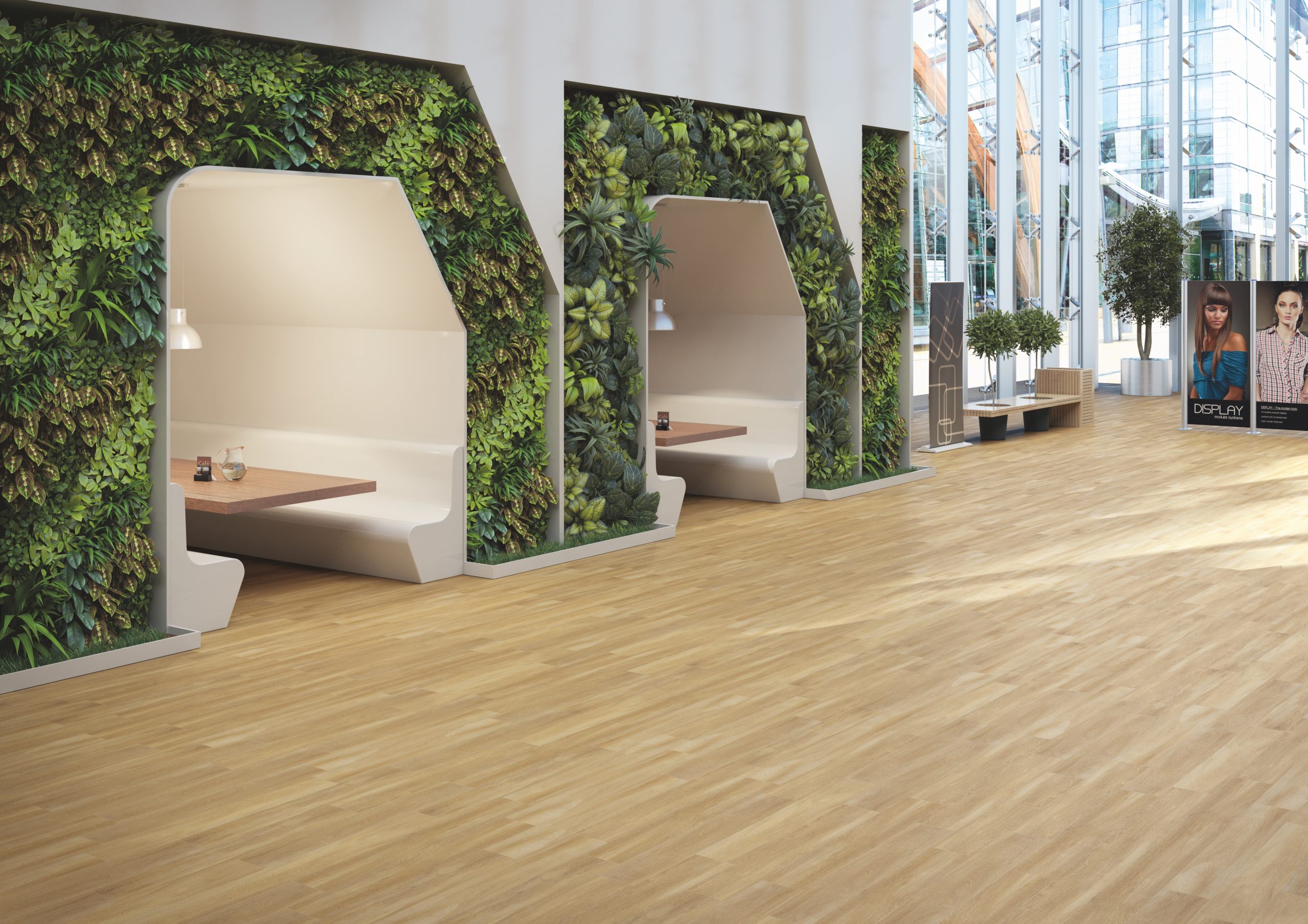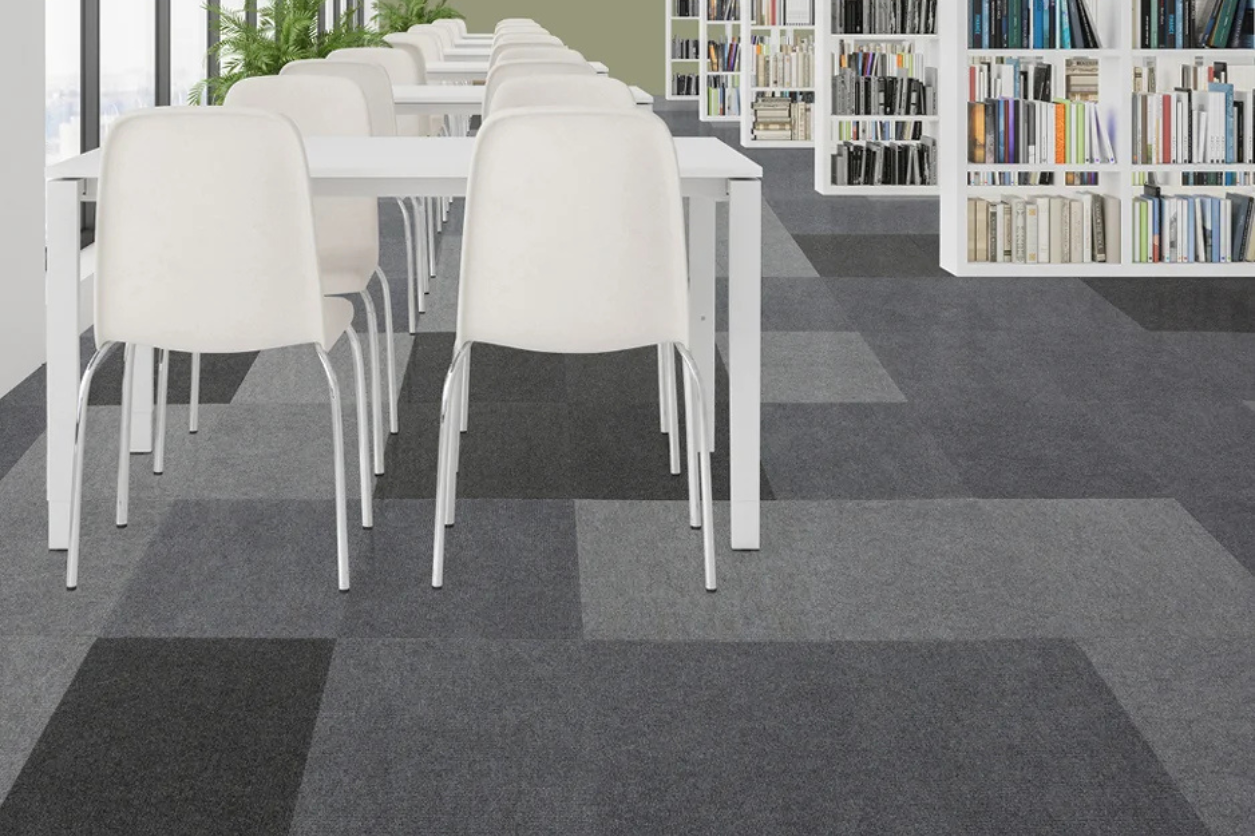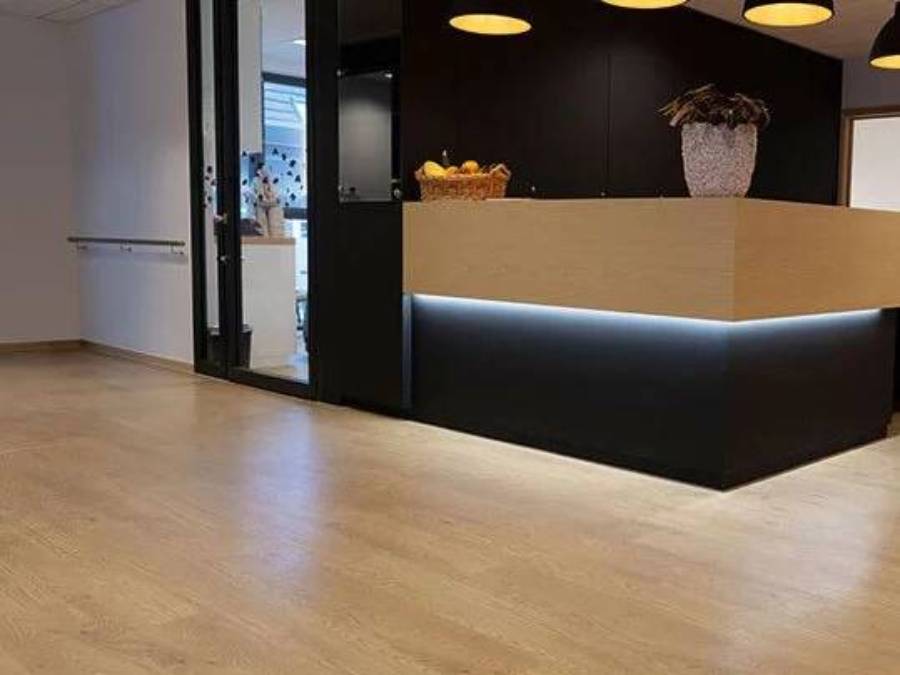
One of the biggest flooring trends in recent years is the adoption of natural materials, textures and patterns as part of both home interior design, commercial buildings and offices, but vinyl floor tiles can help provide this luxurious look without all of the problems that come with it.
Part of this switch is a growing appreciation for biophilic design, a trend guided by a desire to reconnect to nature through the use of plants, living walls, natural materials and designs inspired by nature.
There are many different types of vinyl floor tiles that can help with this by adding a comfortable, versatile, long-lasting flooring solution that looks like wooden floorboards or natural polished stone.
Given that the latter is seen as luxurious and desirable in many corporate settings, here are just some of the reasons why vinyl might be the better choice.
Stone Cannot Always Be Used
The simplest reason why marble-effect vinyl is the better choice is that stone is often impractical, if not impossible to use in some buildings.
Natural stone and marble are both extraordinarily heavy and require particularly solid foundations to be laid effectively, and that can sometimes limit their use in older buildings.
As well as this, it is not the easiest material to cut to shape and prepare for a high-traffic environment.
By contrast, vinyl is robust and yet very light, easily used in practically any building type from a listed building to a modern high-rise. It is also designed to be easily installed and replaced when necessary due to its modular tiled structure.
Vinyl Is Easier To Maintain
Natural stone is extremely hard-wearing and can broadly survive for thousands of years of constant use. However, many types of polished stone are remarkably easy to scuff, scratch, stain or discolour through heavy or even moderate use.
This can be a problem if you have bought marble specifically for its luxurious, faultless look, and can be doubly problematic if your polished stone is a light enough shade that any stains or damage can become very visible very quickly.
Marble, in particular, is vulnerable to acidic etching, where spilling acidic drinks and substances such as orange juice or wine can cause permanent damage that is potentially very expensive to remove.
This can be fixed with frequent maintenance and the use of appropriate sealants, but an easier alternative is to use vinyl.
It does not stain in the same way, has remarkable longevity and can be easily replaced whenever a tile wears out, rather than requiring complex repair work.
Vinyl Is More Cost-Effective
Natural stone comes with a natural premium and can be particularly expensive to use as flooring due to the sheer amount you need to cover the entire floor space.
Depending on what type of marble you want, it needs to be quarried from specific sites, shaped, prepared, cut to size and transported, all of which add cost to an inherently expensive material.
It is also expensive to install, requiring dedicated professionals and additional equipment, particularly if the flooring is not being installed on the ground floor.
By contrast, vinyl provides many of the same functional benefits such as being easy to clean, but without the sheer expense of marble.
Vinyl Is More Comfortable To Walk On
Marble and natural stone are notoriously firm and hard underfoot, which means that it is not very comfortable to walk on, and the polished surface can potentially lead to slips, trips and falls.
By contrast, vinyl is more comfortable and designed with traction in mind. Whilst it retains the look of marble, it is made using a completely different process, with multiple layers of softer materials that provide enough give and leeway to make it easier to walk on.
As well as this, there is far less of a risk of heels and soles causing damage to vinyl flooring compared to polished stone.
Vinyl Has A Lower Environmental Impact
The sustainability of vinyl tiles is often underappreciated, in part because there is an assumption that natural materials are, more often than not, more sustainable and have a lower environmental impact than composite materials.
This is not always the case, and marble is an excellent example of why. Whilst stone is natural, will last for an extremely long time and can be recycled without specialised techniques, it also has a huge carbon cost in its quarrying and transportation.
This whole-life embodied approach to sustainability must be kept in mind if the main argument for natural stone is environmental in nature.
With a focus on the circular economy, many luxury vinyl flooring ranges are made sustainably with increasing recycled content and recyclability. Browse vinyl flooring from CVT Direct.