Mixed-use commercial buildings place unique demands on flooring. Corridors, reception areas and shared spaces are used by many people for a variety of purposes, at different times of day, often all within the same building.
From office workers and visitors to delivery staff and cleaning teams, the flooring must cope with constant traffic while maintaining a professional appearance.
So what are the most durable flooring options for mixed-use commercial buildings, and how do you choose the right solution for each area? Below, we explore the best-performing options and how to use them effectively across shared spaces.
Why do mixed-use buildings need specialist flooring?
Unlike single-purpose commercial spaces, mixed-use buildings experience varied wear patterns. Corridors see continuous footfall, reception areas create first impressions, and shared spaces must balance durability with comfort and acoustics.
The right flooring should:
- – Handle high and varied foot traffic
- – Maintain a consistent look across large areas
- – Be easy to clean and repair
- – Meet commercial safety and fire standards
Choosing flooring designed specifically for commercial use is essential for long-term performance.
Why does vinyl plank flooring work so well in shared spaces?
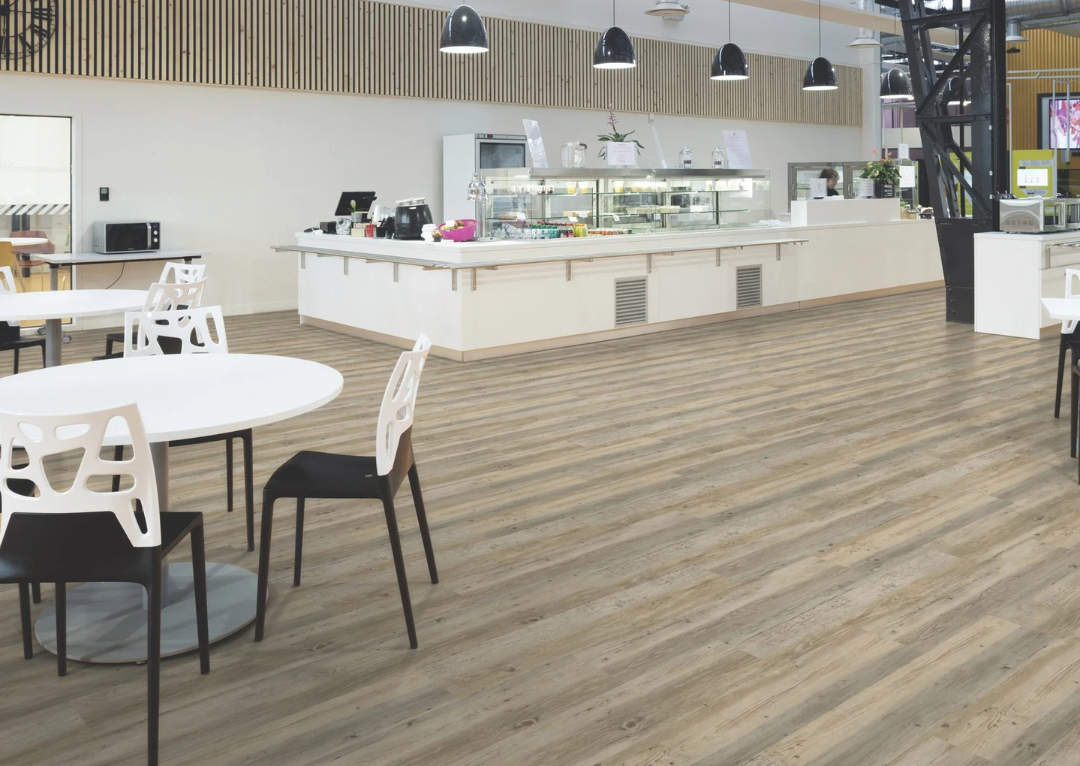
Vinyl plank flooring is one of the most popular choices for mixed-use commercial buildings, and for good reason.
Its key advantages include:
- – Exceptional durability under heavy foot traffic
- – Resistance to scuffs, spills and moisture
- – Easy cleaning with minimal maintenance
- – A wide range of realistic wood-effect designs
Vinyl plank flooring is particularly well suited to reception areas, lift lobbies and main circulation routes, where visual impact and durability are equally important. It provides a smart, modern look without the maintenance demands of natural materials.
Is carpet tile flooring better for corridors?
For many buildings, carpet tile flooring is the most practical option for corridors and shared internal walkways.
Carpet tiles offer:
- – Excellent durability in high-traffic areas
- – Individual tile replacement if damaged or stained
- – Reduced noise transfer between spaces
- – Secure installation that minimises movement
In long corridors, carpet tiles also help break up large areas visually while providing comfort and acoustic control, which is a key consideration in multi-tenant buildings.
Can you combine vinyl and carpet flooring?
In mixed-use environments, a zoned flooring approach often delivers the best outcome.
A common strategy is:
- – Vinyl plank flooring in reception areas and main entrances
- – Carpet tile flooring in corridors and quieter shared spaces
- – Transitions that are safe, flush and visually cohesive
This approach balances durability, acoustics and style while allowing each area to perform its intended function.
How flooring impacts first impressions in reception areas
Reception areas are often the most heavily used and most visible spaces in a building. Flooring here must be robust enough to cope with foot traffic while projecting a professional image.
Vinyl plank flooring is ideal because it:
- – Maintains its appearance over time
- – Handles dirt and moisture brought in from outside
- – Supports a wide range of interior design styles
Using vinyl in reception areas creates a strong first impression without compromising on practicality.
What are the maintenance and durability considerations for mixed use flooring?
Durability isn’t just about how long flooring lasts; it’s also about how easy it is to maintain.
Both vinyl plank flooring and carpet tile flooring offer:
- – Simple day-to-day cleaning routines
- – Compatibility with commercial cleaning equipment
- – Lower long-term maintenance costs compared to many alternatives
Carpet tiles, in particular, reduce lifecycle costs by allowing targeted replacement rather than full refits.
How can flooring help noise control in shared commercial spaces?
Noise is a common issue in mixed-use buildings. Hard surfaces can amplify sound, especially in corridors and shared areas.
Carpet tile flooring helps by:
- – Absorbing footfall noise
- – Reducing echo in long corridors
- – Improving comfort for occupants
Using carpet tiles strategically in shared spaces can significantly improve the overall environment without sacrificing durability.
Is January a good time to upgrade flooring?
January is often a quieter period for many commercial buildings, making it an ideal time to plan flooring upgrades. Installing new flooring early in the year allows building managers to prepare for increased occupancy and usage later on.
It also provides time to:
- – Phase installations with minimal disruption
- – Lock in stock availability from leading manufacturers
- – Spread refurbishment budgets across the year
Choosing the right flooring partner
The most durable flooring solutions for mixed-use commercial buildings come from combining the right products with expert guidance.
A specialist supplier can help you match vinyl plank flooring and carpet tile flooring to each area’s needs, ensuring long-term performance across corridors, reception areas and shared spaces.
If you have any questions or comments, please feel free to get in touch with the CVT Direct team via our Contact Us page or give us a ring on 0345 121 1234.
Browse our flooring and accessories product ranges and use the filters when searching for your new flooring and the accessories needed.