As the first heatwave of summer hits, the feel of your flooring becomes more noticeable than at any other time of year. Some floors can trap heat and feel uncomfortable underfoot, while others naturally stay cooler and help regulate indoor comfort.
Whether you’re fitting out a home, office, retail space, or commercial building, choosing the right flooring can make a real difference to how a space feels during warmer months, especially in the UK, where buildings aren’t always designed for prolonged heat.
Here’s how to choose flooring that stays cool in summer without sacrificing durability, style, or practicality.
Why flooring temperature matters
Flooring plays a bigger role in indoor comfort than you might think. Heat builds up in interiors through sunlight, poor ventilation, and insulation. Once trapped, that heat often lingers at floor level, especially in spaces with large windows or limited airflow.
The result can be:
- Uncomfortable walking surfaces
- Increased overall room temperature feel
- Reduced productivity in office environments
- Over-reliance on fans or air conditioning
Choosing flooring that naturally stays cooler helps reduce heat retention and improves comfort throughout the day.
Best flooring types for staying cool
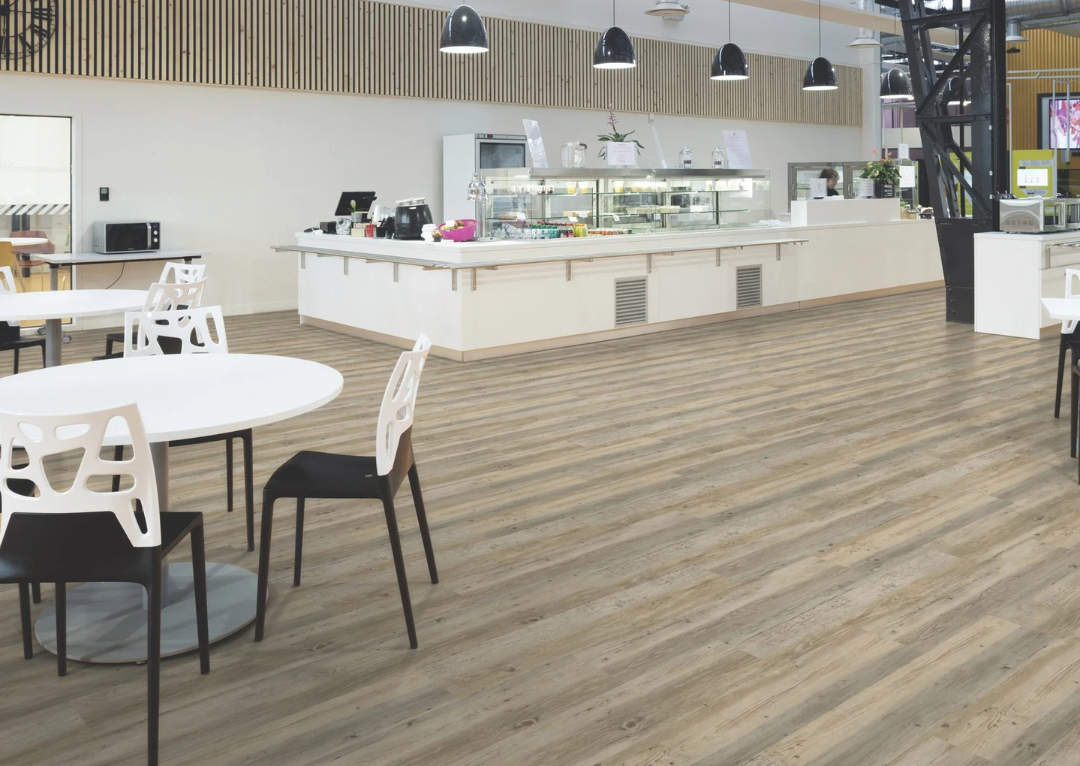
1. Luxury vinyl tiles (LVT)
Luxury vinyl tiles and variations such as vinyl plank flooring are one of the most reliable choices for maintaining a cooler surface temperature in summer.
Why LVT works well in heat:
- Low thermal retention compared to thicker flooring systems
- Smooth surface disperses heat more evenly
- Doesn’t trap warmth like heavy fibre-based flooring
- Works well in both residential and commercial environments
LVT and vinyl plank flooring is particularly effective in rooms that receive direct sunlight, such as conservatories, open-plan offices, or retail spaces with large shopfront windows. It remains stable and comfortable underfoot even during warmer days.
2. Vinyl sheet flooring
Vinyl sheet flooring offers similar benefits to LVT but with fewer seams, which can further improve heat distribution.
Key advantages in summer conditions:
- Continuous surface reduces heat pockets
- Easy to clean and maintain during high-use summer periods
- Performs well in kitchens, corridors, and healthcare environments
- Resists expansion in fluctuating temperatures
Because there are no individual joints, vinyl sheet flooring can feel more consistent and stable, particularly in larger spaces.
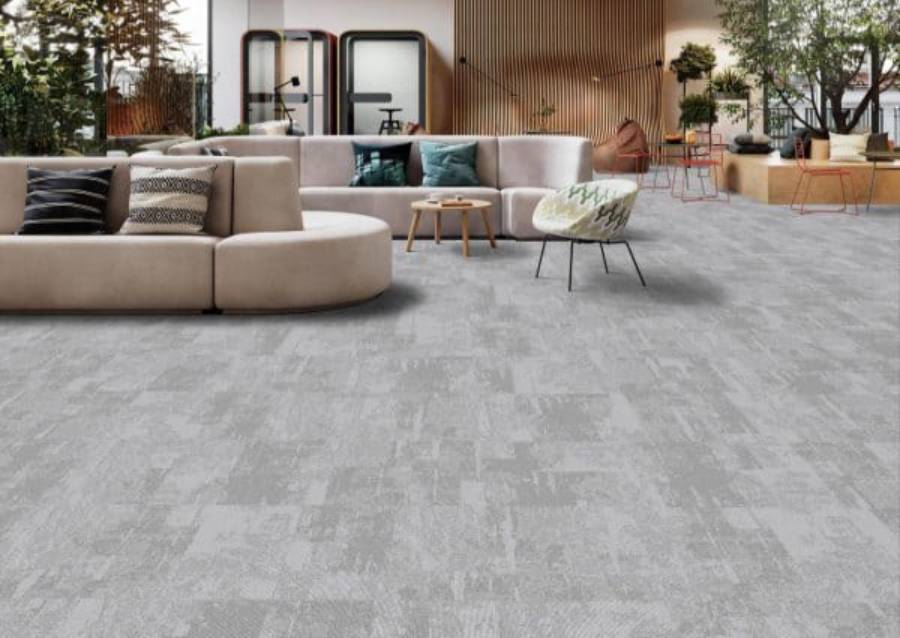
3. Carpet tiles (correctly specified)
Carpet might not be the first material people associate with staying cool, but modern carpet tiles can actually perform surprisingly well when chosen correctly.
Low-pile, breathable carpet tiles:
- Do not retain heat as much as thick domestic carpets
- Allow better air circulation at floor level
- Help regulate overall room temperature by reducing glare and heat reflection from hard surfaces
They’re especially effective in office environments where comfort and acoustics matter equally. However, specification is key. Dense, thick-pile options tend to trap heat, while commercial-grade low-pile tiles offer a more balanced performance.
What makes flooring feel cooler?
Several factors influence how warm or cool a floor feels:
1. Material density
Heavier, dense materials tend to absorb and hold heat longer. Lighter, engineered materials like vinyl systems respond more quickly to temperature changes.
2. Surface texture
Smooth surfaces tend to feel cooler because they don’t trap warm air in fibres or deep textures.
3. Colour choice
Lighter flooring colours reflect more heat and light, helping spaces feel cooler overall.
4. Sun exposure
Rooms with large windows or south-facing aspects will always require more heat-conscious flooring choices.
Practical tips to keep floors cooler
Even the best flooring performs better when supported by good design choices.
- Improve airflow – Good ventilation reduces heat build-up at floor level.
- Use blinds or UV window films – Reducing direct sunlight prevents overheating of both rooms and flooring surfaces.
- Choose lighter tones where possible – Neutral and light shades reflect heat and create a cooler visual feel.
- Combine with entrance systems – Dirt and dust can hold heat and affect surface comfort. Entrance matting helps reduce this build-up.
- Maintain regularly – Clean flooring performs better thermally than surfaces covered in dust or residue.
Commercial vs residential considerations
In commercial spaces, flooring needs to balance cooling performance with durability and heavy foot traffic.
- Offices benefit from carpet tiles for acoustic comfort and temperature balance
- Retail spaces often perform best with LVT due to sunlight exposure and cleaning needs
- Healthcare or public environments require hygienic, easy-clean vinyl solutions
In residential spaces, comfort and visual appeal tend to be the priority, but heat management is increasingly important as summers become warmer.
When you choose carefully, your flooring supports the design of a space, and actively improves how it feels year-round.
If you have any questions or comments, please feel free to get in touch with the CVT Direct team via our Contact Us page or give us a ring on 0345 121 1234.
Browse our flooring and accessories product ranges and use the filters when searching for your new flooring and the accessories needed.