Education buildings are some of the most demanding environments for flooring. Corridors see thousands of footsteps each day, classrooms experience constant chair movement, and spills are a daily occurrence in dining halls and practical learning spaces.
Choosing the right flooring is essential; not just for aesthetics, but for durability, safety, and cost-effectiveness. So which flooring types genuinely stand up to daily wear in schools and colleges?
Why is school flooring different from other commercial spaces?
Schools combine high footfall with varied use. Corridors act as transport hubs between lessons, classrooms shift between quiet study and collaborative work, and dining halls experience heavy movement and frequent spills.
Unlike many commercial environments, schools often have tighter budgets and expect floors to last for years. Flooring must therefore be:
- – Highly durable
- – Easy to maintain
- – Safe underfoot
- – Cost-effective long-term
- – Suitable for different zones within the building
Performance matters as much as appearance, especially when heavy wear and frequent cleaning are factors.
Why is vinyl flooring common in school corridors?
Corridors and entrance areas see the highest levels of traffic in schools. Vinyl flooring is particularly suited to these spaces because it is:
- – Durable and resistant to scuffing
- – Easy to clean and sanitise
- – Water-resistant for wet or muddy conditions
- – Suitable for long runs without seams that trap dirt
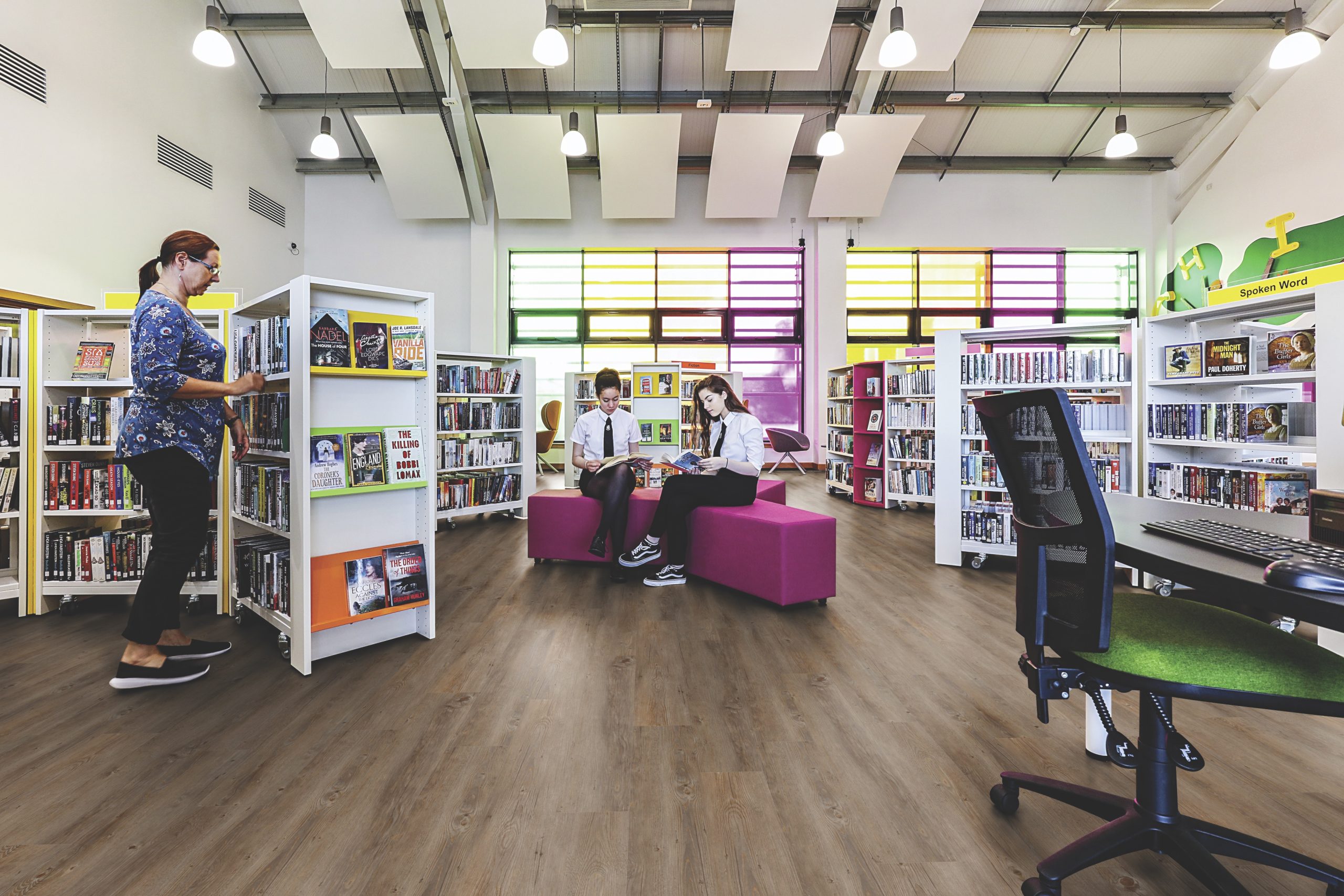
Vinyl plank flooring and vinyl floor tiles are popular choices in corridors, hallways, and dining areas. They provide a resilient surface that can handle heavy daily wear while maintaining a clean, professional look.
Are carpet tiles suitable for classrooms and quiet zones?
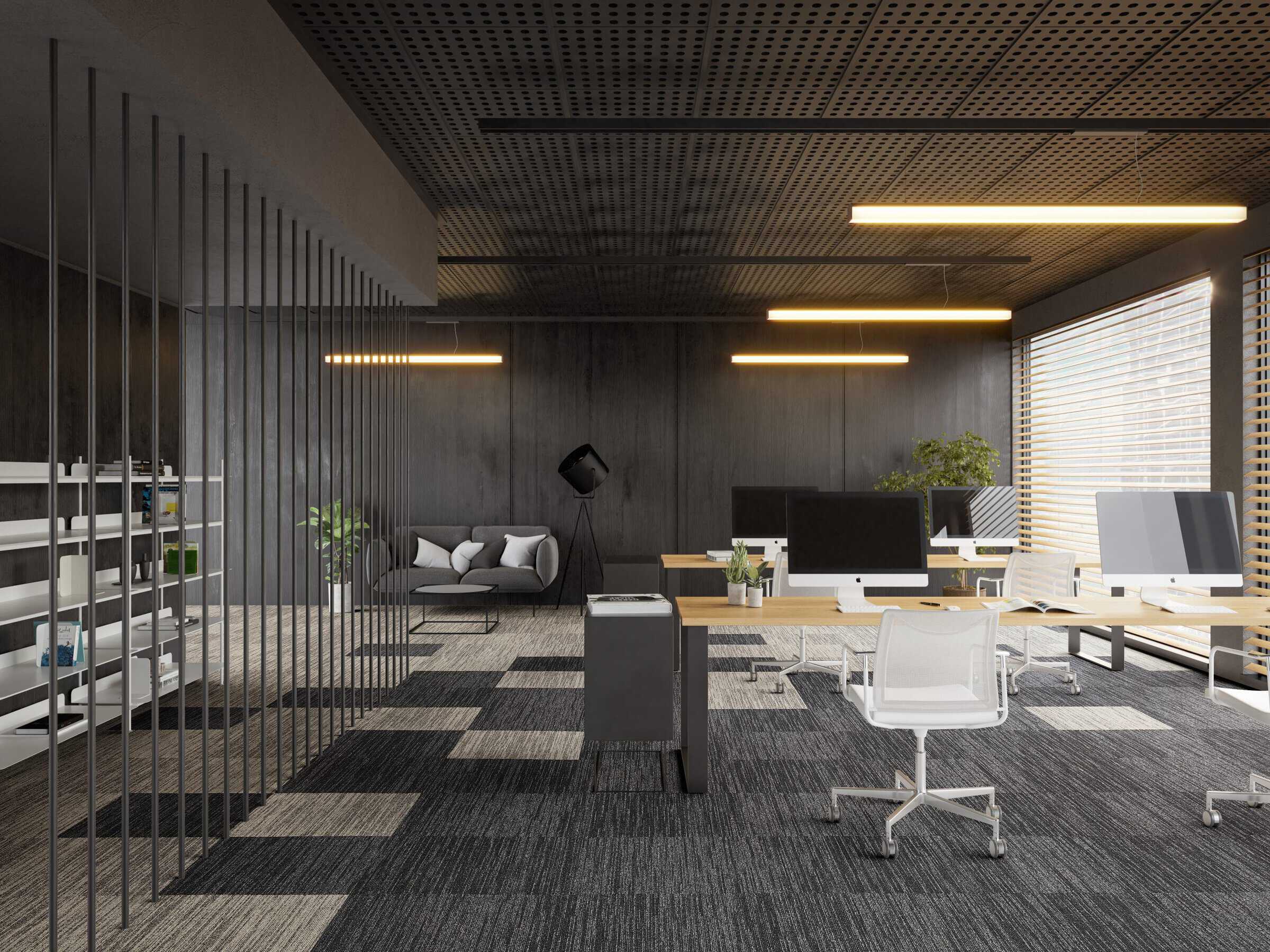
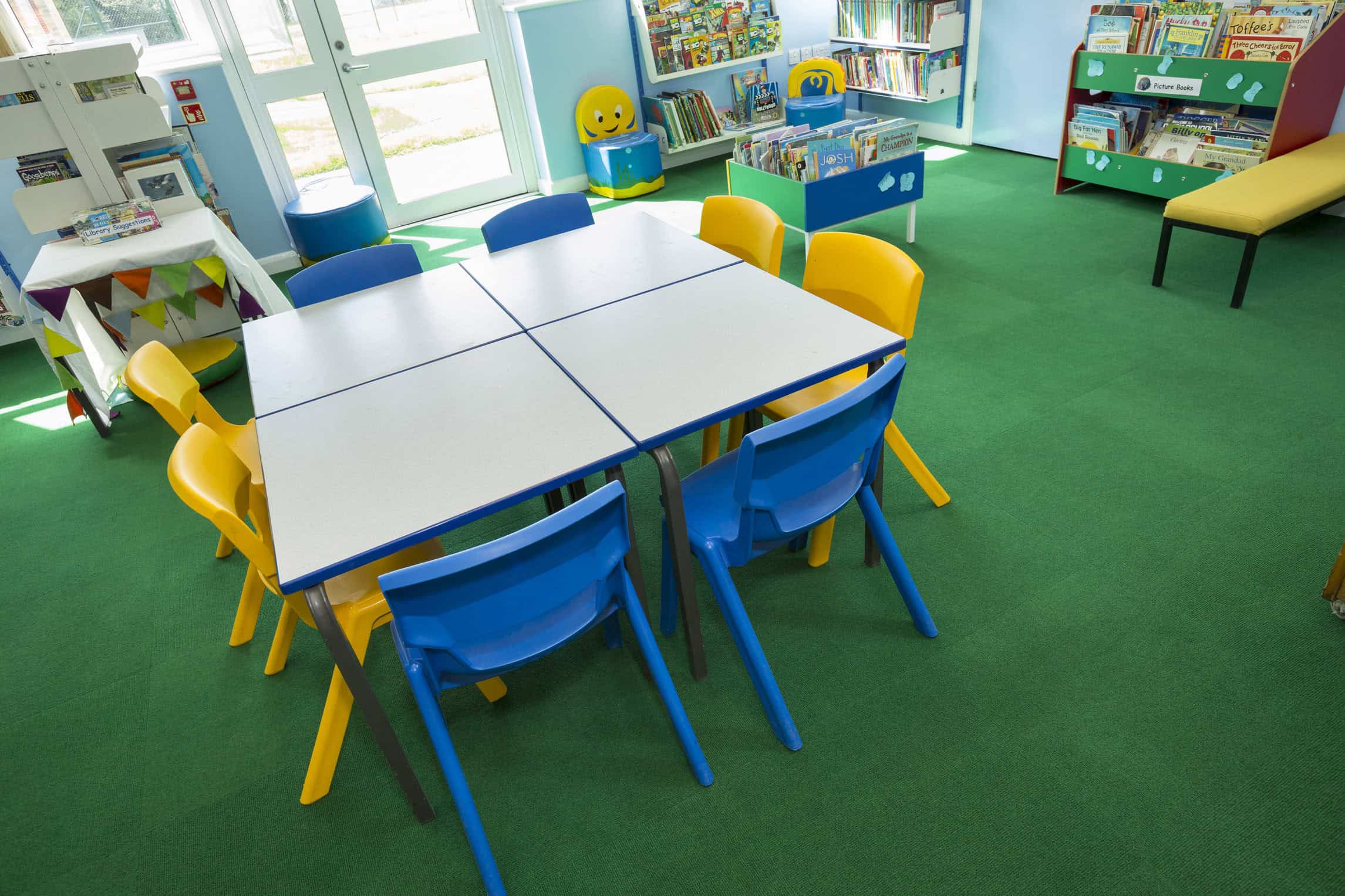
While corridors demand resilience, classrooms, libraries, and staff offices benefit from carpet tiles. Carpet provides a softer underfoot surface, reduces noise, and creates a warmer, more comfortable environment conducive to learning.
Heckmondwike carpet tiles are widely used in schools due to their durability and ease of maintenance. They are particularly effective in:
- – Classrooms and seminar rooms
- – Libraries and study areas
- – Administration offices
- – Quiet breakout spaces
The modular nature of carpet tiles also allows for targeted replacement if a section becomes stained or damaged, saving time and money during maintenance.
How do carpet tiles improve acoustics?
Noise is a common challenge in schools. Hard surfaces such as vinyl can amplify footfall and chatter. Carpet tiles absorb sound, reducing echo and creating a calmer learning environment.
This is particularly beneficial in libraries, classrooms, and open-plan offices where concentration is important. Using carpet in these zones also contributes to student and staff wellbeing by providing a quieter, less stressful atmosphere.
What role does durability play in school flooring?
Durability is critical across all areas of a school. Vinyl flooring must resist scratches, heavy foot traffic, and chemical cleaning agents. Carpet tiles need to maintain pile structure and appearance despite repeated wear.
High-quality products, like commercial-grade vinyl and Heckmondwike carpet tiles, are designed specifically for school environments. They maintain performance and appearance for many years, reducing the need for costly early replacement.
How important is maintenance and ease of cleaning?
Maintenance is a major consideration in schools. Corridors with vinyl flooring can be quickly swept and mopped daily, while carpets in classrooms or offices can be vacuumed and deep-cleaned periodically.
Carpet tiles have the advantage of modular replacement: a single damaged tile can be swapped out without disturbing the rest of the room. Similarly, vinyl flooring can be sealed and cleaned efficiently to handle spills and dirt, ensuring hygiene standards are maintained.
How does choice of colour and finish impact performance?
Neutral and medium-tone finishes work well in schools. They hide scuffs, dirt, and footprints better than very light or very dark options.
Vinyl flooring can be selected with slip-resistant finishes for safety, while carpet tiles can include subtle patterns to maintain a neat appearance over time.
The right choice of finish also reduces the visual impact of wear, helping floors maintain a fresh look throughout their lifecycle.
What should decision-makers prioritise in school flooring?
When selecting flooring for schools and colleges, prioritise:
- – Durable, commercial-grade materials
- – Zone-specific performance (vinyl for corridors, carpet for classrooms)
- – Acoustic benefits in learning spaces
- – Ease of maintenance and modular replacement
- – Safety, including slip resistance and smooth surfaces
- – Long-term value over upfront cost
A considered approach ensures flooring performs well throughout daily wear, supports the learning environment, and reduces ongoing maintenance costs.
By choosing the right flooring for each area, schools can protect their investment while creating functional, safe, and appealing environments for students and staff.
If you have any questions or comments, please feel free to get in touch with the CVT Direct team via our Contact Us page or give us a ring on 0345 121 1234.
Browse our flooring and accessories product ranges and use the filters when searching for your new flooring and the accessories needed.