There are a lot of flooring options available for businesses depending on what they require, how the commercial space is used and the preferences of any inhabitants, but whilst hardwood floors, vinyl and laminate are popular options, carpet remains the king of office surfaces.
The reason for this ultimately comes down to comfort, versatility when it comes to different designs and patterns, soundproofing and insulation, and the fact that they can be cleaned regularly to keep them looking fresh, alongside all of the aesthetic considerations that come with choosing a carpet for your business.
Historically, there have been two main types of carpet that have been used; historic rugs that have existed for thousands of years and wall-to-wall carpet that is typically laid out in rolls.
However, the past few decades have seen a rise in the popularity of carpet in the form of carpet tiles and carpet planks, and while there are a lot of reasons for this, the wider picture is that they present an option for building managers that is the best of both worlds.
Here are just a few reasons why this is the case.
An End To All-Or-Nothing Carpet Choices
One of the disadvantages of using carpet rolls is that it is a large commitment and yet one which by design cannot be seen in situ.
There will be plenty of models, simulations and the simple ability to look at a set of carpet samples in the room in question, but until the carpet is in place alongside the furniture and especially the lighting, it is impossible to tell exactly how it will look.
If a particular design looks fantastic in the showroom but does not work in the office, the only options are to live with it or to tear it out completely and start again at great expense.
Even if you enjoy a particular look, if your business radically changes styles and themes on a regular basis, such as the seasonal looks of a department store or in the wake of a significant rebrand.
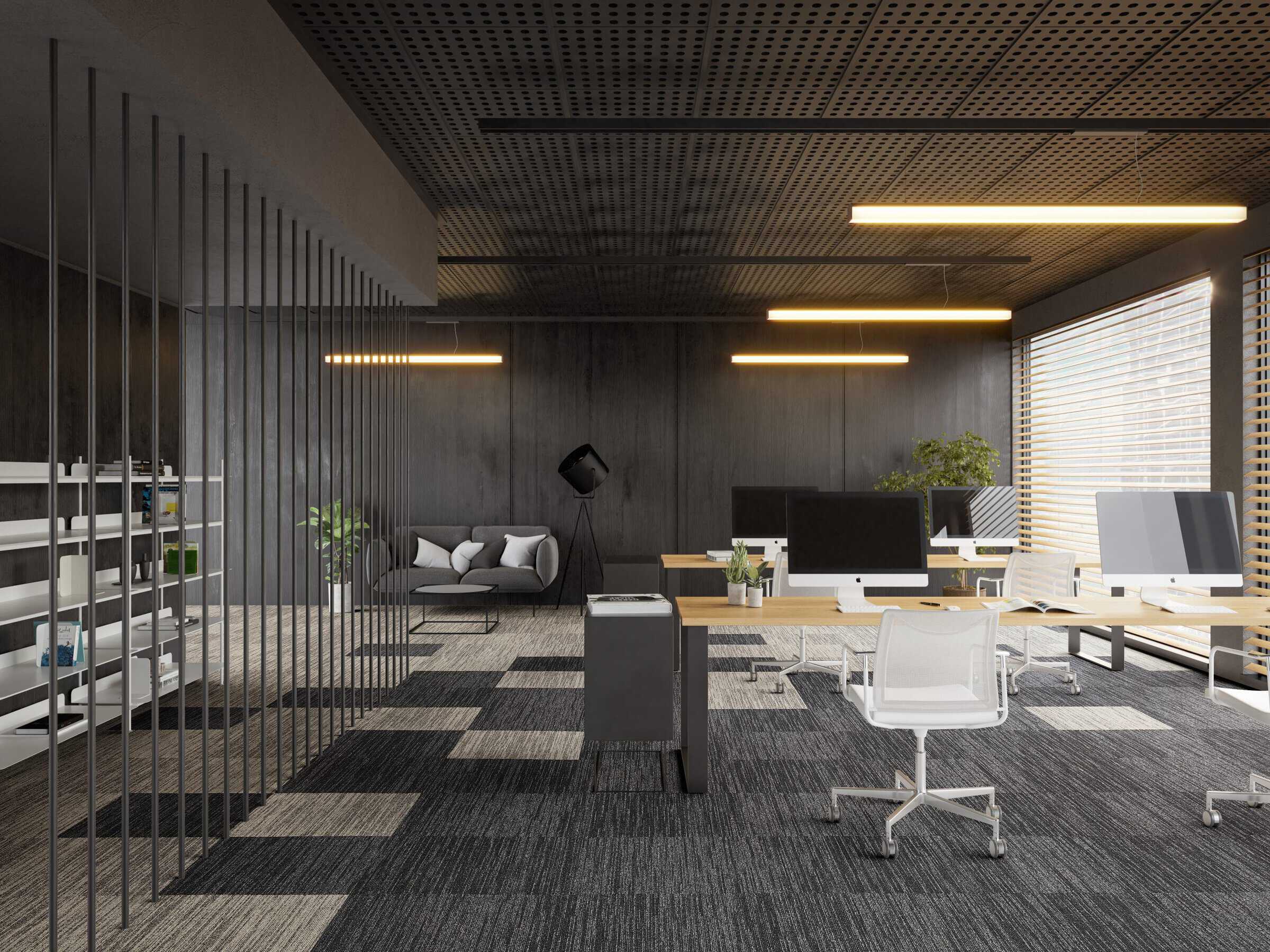
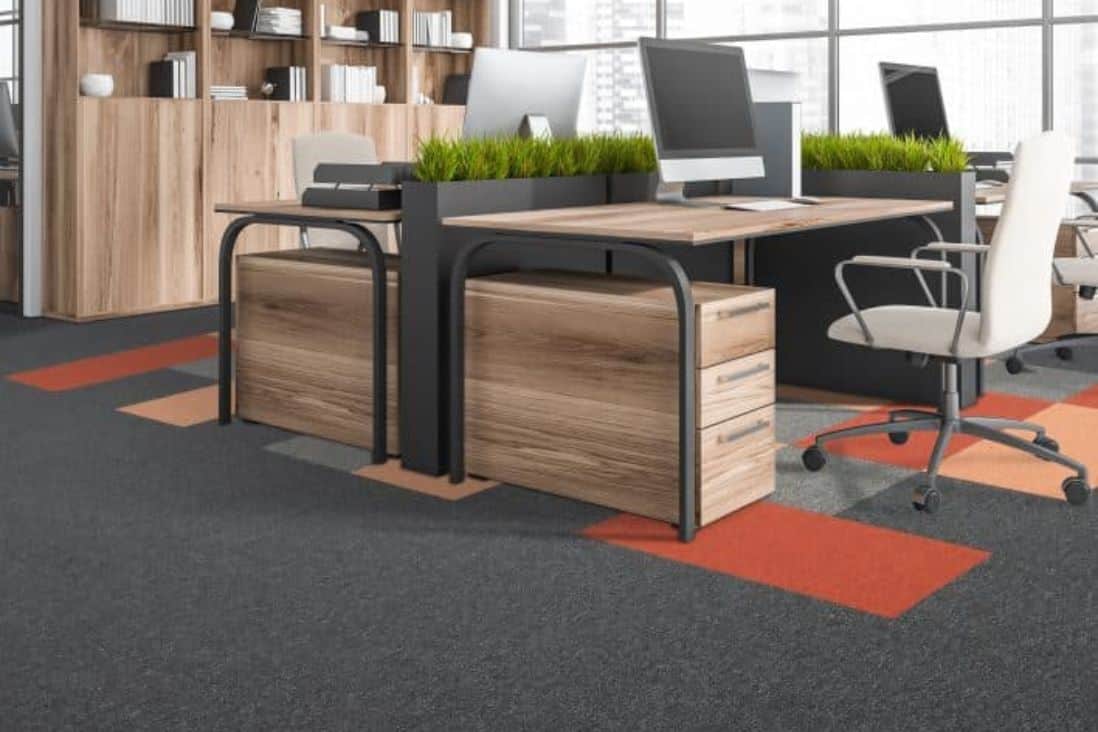
However, using a tiled solution gets around this issue by making it far easier to swap and replace carpet styles, as well as mix and match looks depending on what suits the particular office culture and brand identity of a given workplace.
Much Cheaper Repairs And Replacement
The other consequence of the all-or-nothing nature of wall-to-wall carpets is that whilst carpets used in commercial buildings are hard-wearing and designed for the rigours of high-traffic office spaces, some parts of the carpet are more heavily worn than others.
Not only do certain rooms such as corridors, main meeting rooms and spaces where a lot of employees move around tend to see more foot traffic and by extension receive more wear and tear than say a rarely-used archives room or a quiet study space, but different parts of the same room can see more wear as well.
This is typically most noticeable with indentations, grooves or the build-up of dirt or stains, which can serve as a de facto heat map that shows which parts of a particular floor are used most.
This can be quite frustrating for building managers as if part of a room serves as a pass-through where a lot of people walk through it to reach another area, it means that a carpet could potentially need replacing even when 70-90 per cent of it is practically untouched.
Carpet tiles get around this by being far more efficient and economical. Instead of replacing the whole carpet, simply swap out the tiles that are being used the most as and when you need to, or replace a worn area with spares kept from the same batch.
It saves a lot of money and a lot of time, as everyone else in the office can still use the space whilst the carpet is being replaced, rather than having to move all of the furniture out, replace the carpet and move everything back in.
Reduce, Reuse, Recycle
Using tiled carpets is a greener, more sustainable alternative by following all three principles of reduce, reuse and recycle.
As alluded to with the ability to swap out high-traffic carpet without disposing of a whole roll, having a set of tiles is much more economical as you only replace what needs to be replaced.
Also, far less carpet is wasted in unconventionally shaped rooms. It is far easier, after all, to cut a tile to size than an entire roll.
As well as this, carpet tiles are often far easier to reuse, as the modular nature of the tiles means that they are suitable for any size or shape of room. In addition, they are easier to move on wheeled trolleys than a cumbersome roll of carpet.
Finally, carpet has historically been difficult to recycle, but many tiles and planks are made from recyclable material and are designed in ways that allow for the textiles to be recycled or reused as required.
If you have any questions or comments, please feel free to get in touch with the CVT Direct team via our Contact Us page or give us a ring on 0345 121 1234.
Browse our flooring and accessories product ranges and use the filters when searching for your new flooring and the accessories needed.